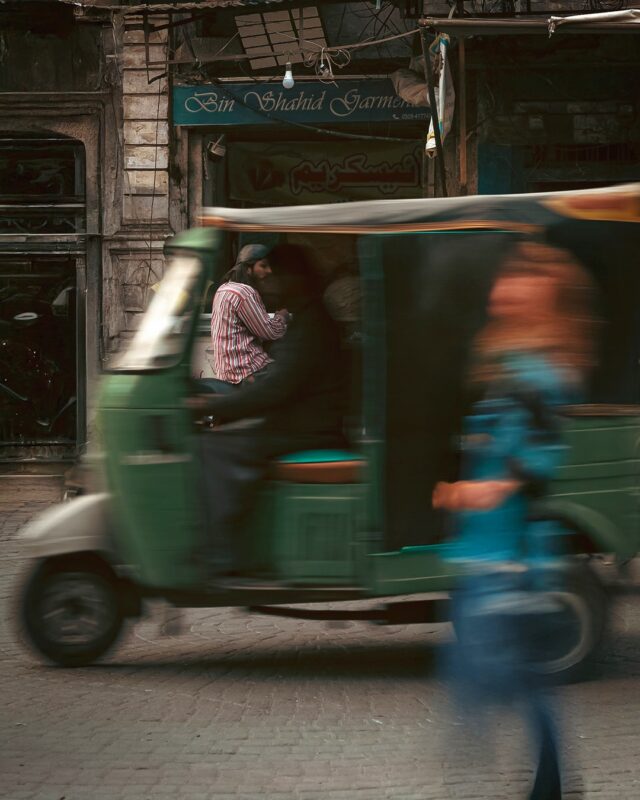
I had been wanting for some time to make street photographs through the openings of rickshaws in Lahore. The idea was simple: compose for the back layer first, pick the spot where the subject is likely to pass, and wait for the moment to enter the frame.
Normally, this is easier with a zoom lens. I can stand where I need to stand, set it around f/8, and let the street do what it does. But this time I wanted to see if a 50mm at wide f/1.2 aperture could work too, so that I could let the foreground fall into a soft blur and turn into a frame of its own.
-
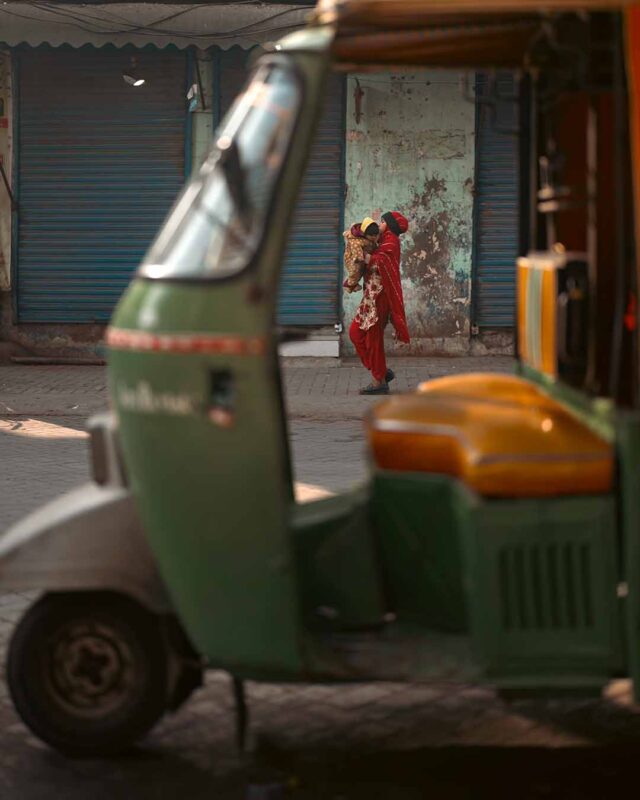
A Frame Within a Frame
The above photograph was made at f/1.2. It worked once, but I couldn’t repeat it reliably, even after trying a few more times. So I switched back to my trusty zoom lens.
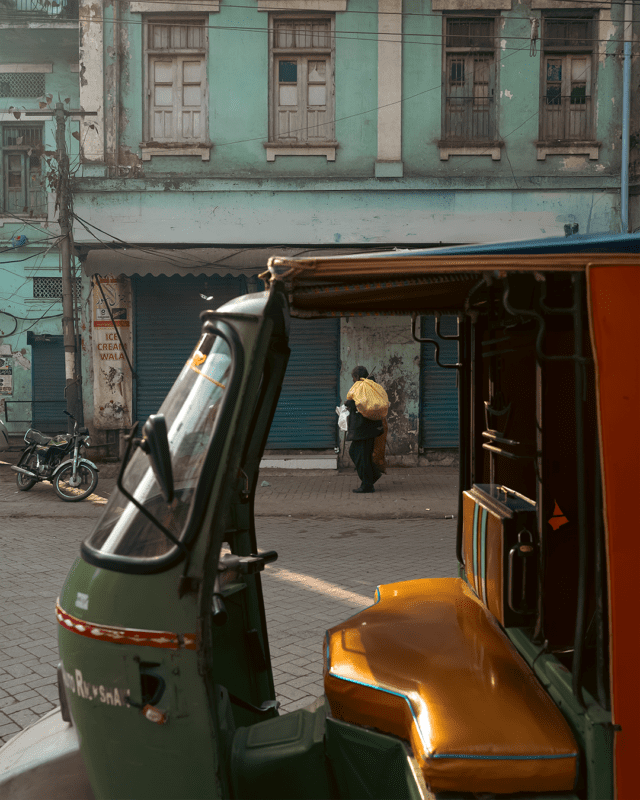
With longer focal lengths, the background feels pulled forward, so the subject sits tighter against the layers behind. Focusing is unforgiving but the look draws the eyes of the viewer to the subject. So with the zoom lens, I tried using a slightly longer focal length but with a smaller aperture.
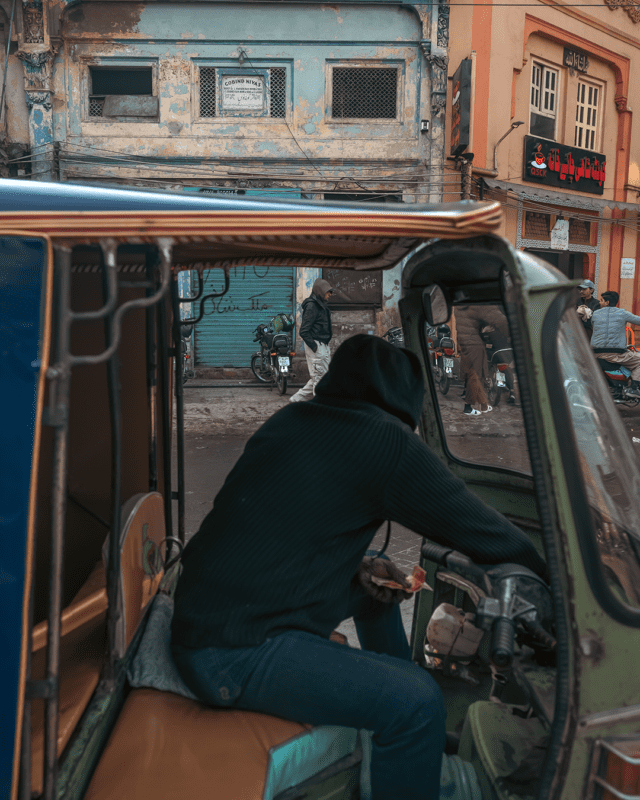
Sometimes the layers click, not just in depth, but in colour too.
At f/8, even at slightly longer focal lengths, you just cannot get the separation and blur that is native to faster lenses. So used sparingly, the shallow depth of field does have its merits and while I would love to carry a 50mm f/1.2 or a 135mm f/1.8 on the streets for that unique (sometimes overused) look, I realised why I keep coming back to zooms and smaller apertures. These exotic prime lenses, despite producing great images, were getting in my way. Focusing became unforgiving, timing the shot became difficult and my hit rate dropped. Still, when it comes together, the street feels layered, almost built out of frames. But ultimately, whether you use primes or zooms, the lens which you are most comfortable with will eventually yield the results you are looking for. I liked the blur in the foreground produced by that f/1.2 aperture, so in order to get something similar with a wider lens and smaller aperture, one could make use of motion blur.
-
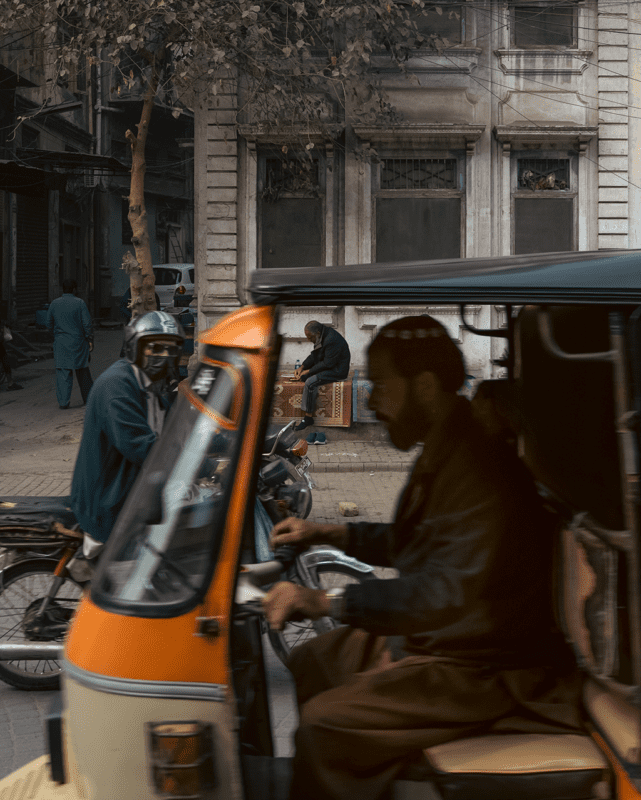
Layers and Depth
I also tried similar compositions with a 135mm f/1.8 lens as well. And while it sort of worked, this focal length requires a different mindset altogether and enough distance from the subject. The man was sitting across two lanes and quite far away from me, and yet the compression made him appear so close. The longer focal length and the f/1.8 aperture completely blurred out the rickshaw in the foreground. This lens would need more patience though, but will reward you if you put some time and effort into it.
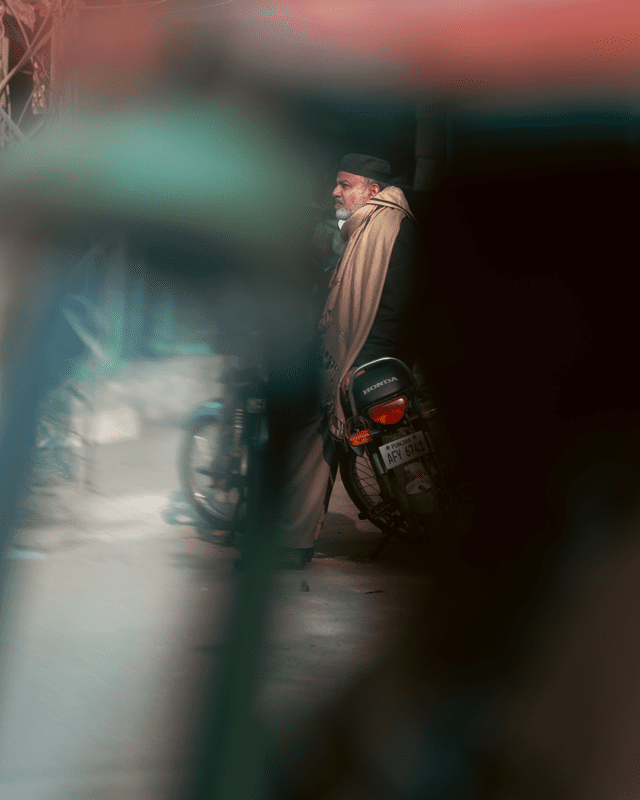
135mm renders unlike any other lens that I have.
This started as an experiment to find frames within the rickshaws of Lahore, but it turned into a lens comparison. That is the trap for me. The more options I carry, the more I start thinking about gear instead of the street. It is also why travelling light matters and why so many street photographers end up sticking with one lens for years.