I have never really photographed with the intention of selling prints. For years I just walked around Lahore with a camera, made pictures that felt right in the moment, shared some of them online and carried on. The idea of “fine art prints” always felt like something other people did.
Recently that has started to change. I began printing a few of my own photographs at home and, to my surprise, I enjoy the printing almost as much as taking the pictures. Tweaking tones, choosing paper, seeing an image turn into something I can hold. It has opened up a different way of looking at my work. It also helped me thinking about taking photographs differenlty.
At the same time I keep asking myself a simple question: why bother going through all this when I am not even sure if anyone will ever buy a photography print from me?
Everyone already has a good camera in their pocket. AI tools can generate almost any scene from a short prompt. Any file can be sent to a lab and turned into a print. So this note is partly me trying to reassure myself that there is still some scope for making prints, and that if I stay true to the kind of images I care about, maybe there will be a few people who care enough to live with them.
Images are everywhere. Prints are rare.
For me it begins here. A file on your phone is something you visit. A print on your wall is something you live with. You walk past it in the morning, you catch it in the corner of your eye while making tea, it takes up a small but constant place in your day. I have one 24″ x 36″ print of my daughter in my room that has been there for over a decade now and I still enjoy looking at it every time I see it. That quiet, physical presence is what still makes photography prints feel worth the effort to me.
When someone buys a print, they are rarely paying just for the subject. If you only want a picture of a street, a mosque, a sunset or a horse, you can probably make one on your own now. Your phone is good enough. You could even ask an AI model for a “Lahore street in soft evening light” and it will invent one for you.
What people actually respond to is a particular way of seeing. Over time you get used to the colours a photographer returns to, the faces they notice, the way they frame old buildings and messy streets. You start to trust their eye. If someone ever buys a Lahore photography print from me, I hope it is because they want my way of seeing this city on their wall, not just any random print of Lahore.
There is also the very basic problem of screens. When you see my photographs on Instagram or even on this website, you are not seeing exactly what I see here at home. Every phone, tablet and laptop is different. Screen sizes, colour profiles, brightness levels, vivid modes, night filters, battery saver dimming… with all these variables, neither of us really knows what version of the photograph you are getting. The shadows may be blocked, the highlights blown, the colours warmer or cooler than I intended.
When I make a print, I am trying to remove some of that guesswork. I work on the tones and colours, print test copies on the same archival paper I use for final prints, and live with them for a bit in normal room light. I make small corrections until the image feels right. When you hold that print, you are no longer at the mercy of your screen settings. You are seeing the version I worked towards, on paper, as close as I can get to what I actually wanted you to see.
AI adds another layer. It can create convincing images of streets, faces, old architecture and foggy mornings that never existed. I use some of these tools myself for digital sketches and experiments, so I know how good they can look. I also know how quickly they start to feel disposable when you can generate endless variations.
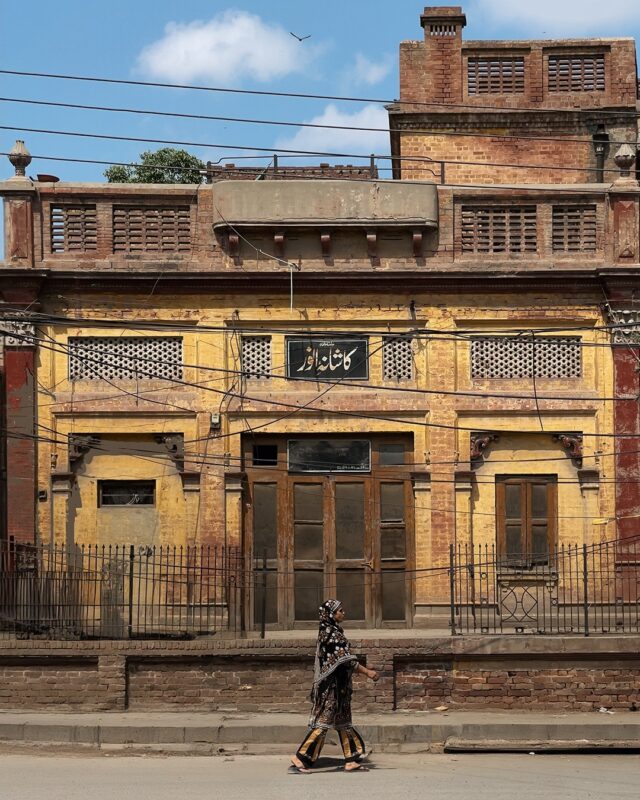
Kashahnai Anwar – a building which was recently demolished.
The photographs I am drawn to print are different for me. A building in Lahore that no longer stands. A horse charging through dust at a tent pegging event. A quiet frame like Not In The Mood that stayed with me for reasons I cannot fully explain. These are tied to real moments. I stood there, pressed the shutter, sorted through all the imperfect frames, and this one survived. Turning it into a print is my way of saying this was worth keeping.
The small set of prints and sketches I offer
Not every photograph I have taken can become a good print. Some of my older street photographs were made on a phone and simply do not have the resolution or detail to hold up as large prints. Others just do not feel strong enough once I see them on paper. So for now I am only offering a small selection of photography prints that look and feel right to me as prints. You can see the small set of prints I currently offer here.
Alongside these, there is also a growing set of digital sketches I have made in Procreate on the iPad with Apple Pencil, based entirely on my own photographs of Lahore. They are still my images, just seen through a slightly different process and a different texture. Some people may prefer a sketch of a building or street instead of a straight photograph when displayed on a wall, so I am slowly adding a few of those as prints too.
I do not know yet how many of these fine art prints will eventually find homes. I am still experimenting, still learning which images work best on paper, still adjusting my own expectations. But I have a quiet belief that there are people who want something more than another file on their phones. People who feel a connection to this city, or to the way I photograph it, and would like one or two of these moments to live on their walls.
If that ever happens, and a few of these prints or sketches travel from my desk to someone else’s home, all this time spent thinking about printing, colour, paper and small decisions will have been worth it. Even if it does not, printing has already changed the way I look at my own work. For now, that is reason enough to keep going.
-
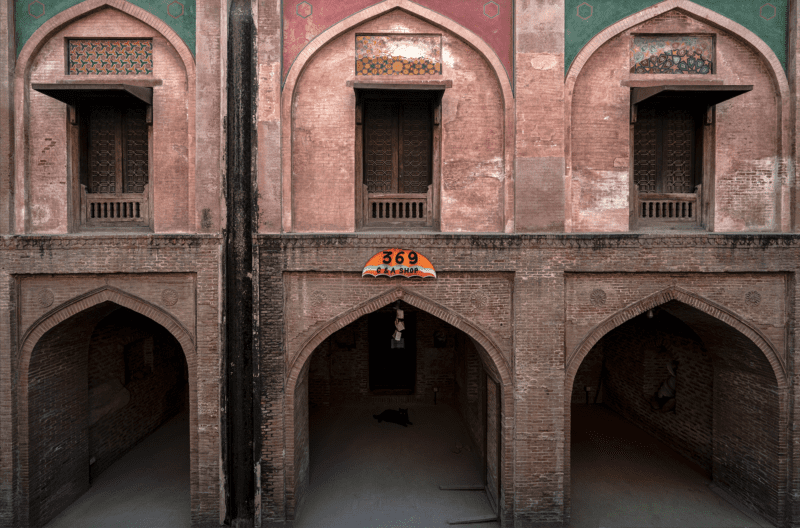
A quiet frame that feels like it could sit on a wall rather than just pass by on a screen.